
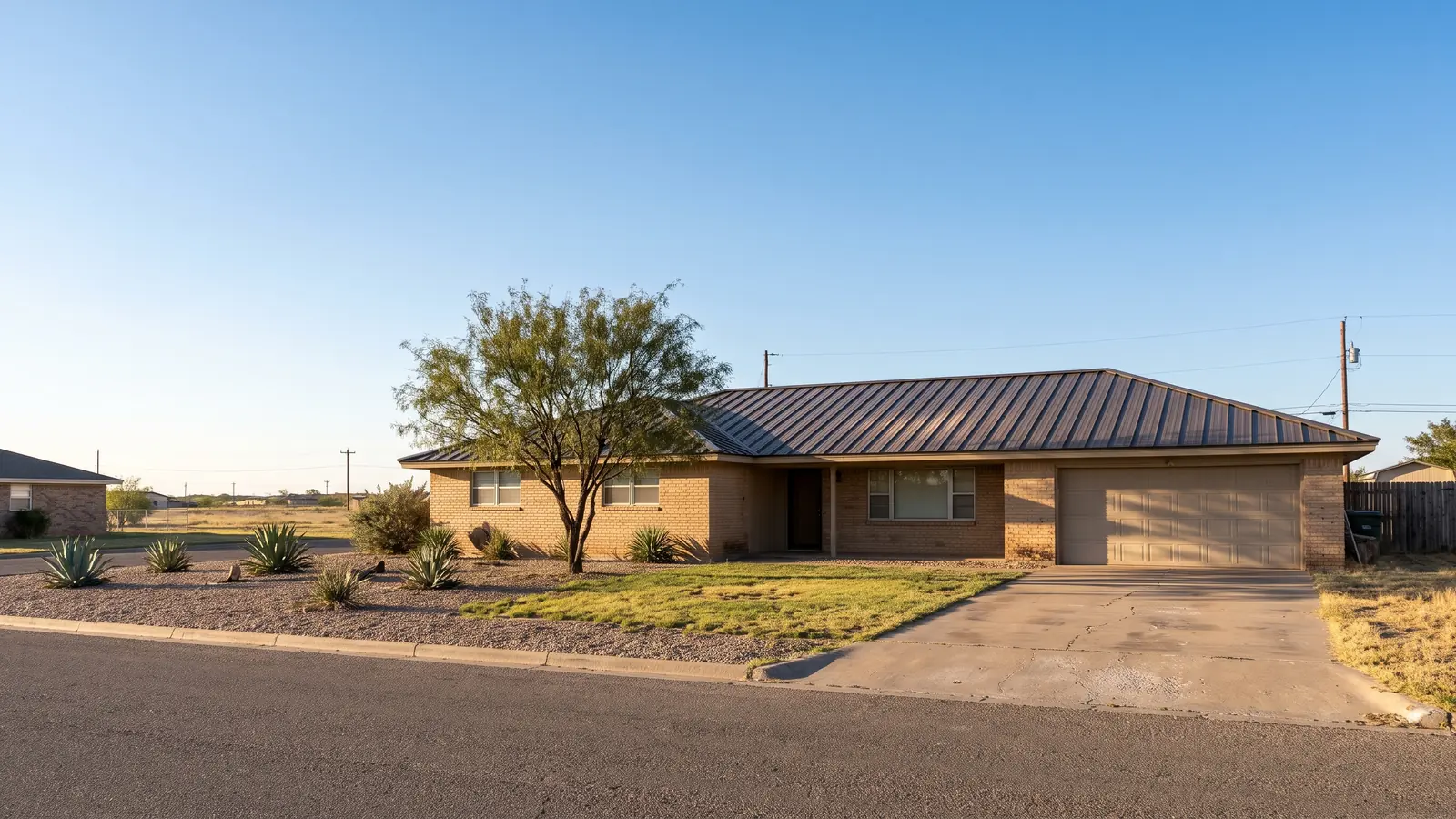
Metal Roof Hail Damage, Sorted by What It Does
The same storm can leave one metal roof cosmetically dented and another leaking. Inspectors and insurers sort hail marks into groups, and the group often decides what gets paid. These are the five things a hail inspection on a metal roof should separate.

Cosmetic Denting
Small round dents in the flat of the panel are the most common hail mark on metal, according to an engineer who assesses hail claims. HomeGuide agrees that metal usually takes only cosmetic damage. The dents can look terrible in low sun and still shed water for decades. Whether they're covered depends on your policy. In 1998 TDI approved an optional endorsement, HO-145, that excludes cosmetic hail damage on roofs receiving an impact-resistance premium credit. It's void unless you signed it, and insurers must tell you about it when you replace with a hail-resistant roof.
- Typical look: shallow, round dents in the pans and minor ribs
- Coverage: check for a cosmetic hail exclusion on your declarations page or endorsements
- Upgrade trade-off: a Class 4 metal roof can earn a premium credit and come with that exclusion

Functional Hail Damage (Holes, Split Seams, Cracked Paint)
Functional damage is hail that changes what the roof does. On metal there are two ways that happens. The first is coating damage. The criterion the engineer quotes calls for no chipping, peeling, blistering, cracking or crazing of the paint under 10X magnification, because cracked paint lets rust start. The second is lost water-shedding, usually at a side seam where a dent has disturbed the sealant inside. Outright holes through the steel are rare. Seams are dented less often because they're two layers thick.
- Coating check: the largest dents, examined under 10X magnification
- Seam check: dents at side seams, which an engineer may water-test
- Holes: rare, but HomeGuide notes deep dents can puncture and leak

Hail-Damaged Flashing, Vents and Trim
The panels aren't the only thing on the roof. Vent caps, pipe boots, skylights, ridge vents, gutters and trim are made from other materials, from plastic to thin aluminum. A cracked plastic vent or a split boot can leak even when every panel is fine. Ask that the inspection list these parts separately, and get them fixed before the next rain if they're open. TDI says your policy may pay for temporary repairs, so keep the receipts.
- Flashing repair: $200 to $500 (Fixr); more detail on the metal roof repair page
- Temporary repairs: cover holes, keep receipts (TDI)

Hail Damage Inspection and Photo Records
Claims go more smoothly with good records. TDI's advice is to take photos and video, list the damage inside and out, and be there when the adjuster comes so they see everything. A good hail inspection on metal adds close-ups of the largest dents, photos of any dented seams and wide shots of each slope with the date. Ask the roofer for the photos as files along with the written summary. The roofer can document and estimate; the adjuster rule further down covers where that role stops.
- Inspection cost: $125 to $350, up to about $900 for steep or complex roofs (Angi)
- Keep: a list of everyone you talk to at the insurance company, with dates (TDI)

Repair or Replace After a Claim
Once the adjuster's estimate is in, the choice is a repair, new panels on the damaged slopes, or a full replacement. If your policy pays replacement cost, TDI says the first payment is the repair estimate minus depreciation, and the second comes after the repairs are done. If you have a mortgage, the check usually goes to the lender, who must contact you within 10 days. TDI also says to get more than one estimate and show contractors the insurer's estimate. For a full tear-off, read the replacement page first.
- Storm-damage repair: $700 to $4,000 (Angi)
- Partial vs full: faded paint on older panels can make new sheets stand out on a partial repair
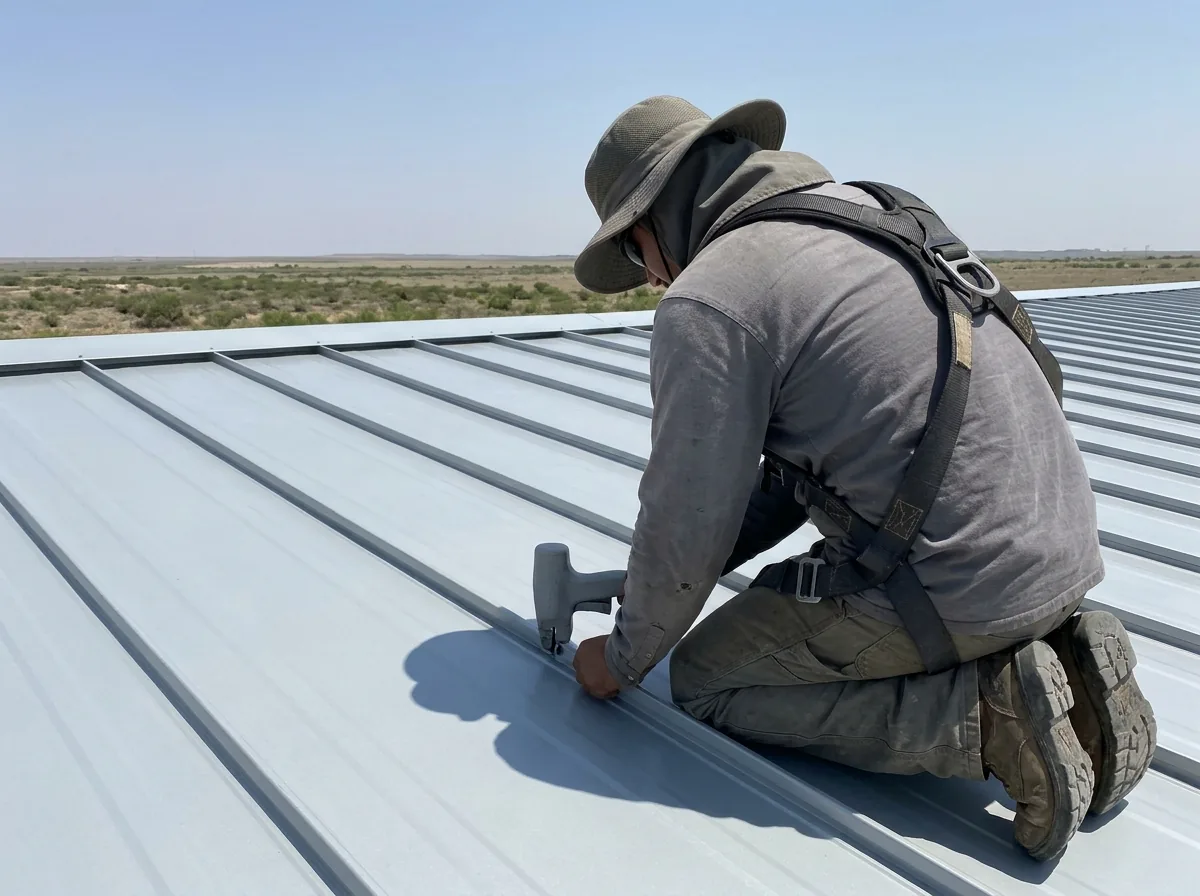
Why Midland homeowners call Midland Metal Roofing
- Free quotes, no obligation to hire
- Panel, gauge and price in writing before any work
- Your request goes to one Midland roofer, not a call list
- Homeowners never pay us for the referral
Midland Hail Records, Year by Year
NOAA's Storm Events database shows how uneven hail is here. Midland County had hail on 33 separate days from 2016 through 2025, and 87% of the reports came in April, May or June. Some years are quiet and some aren't:
Busiest years
2017 with 34 reports and 2019 with 28Quietest
2025 with 5 reports, and 7 each in 2016 and 2021Big stones
31 reports of 2-inch hail or larger, and 9 separate days with stones of 2.5 inches or moreThis year
7 reports through the October 2026 file, the largest 1.50 inches
That pattern is why an inspection is worth having even in a quiet year. A roof that got through 2025 may still carry dents from 2022 or 2024, when the county's largest stones (4 inches) fell. A dent you can tie to a dated storm and a dated photo is easier to argue for than one nobody recorded.
Texas Claim Rules a Roofer Can't Bend
These come from Texas statutes and TDI, and they apply to every hail job in Midland:
You pay the deductible
Insurance Code 707.002 puts the deductible on the policyholder. Under 707.004, an insurer with replacement-cost coverage can hold back the depreciation until you show you paid it, with a canceled check, receipt, card statement or installment contract.No deductible deals
Business and Commerce Code 27.02 makes it a Class B misdemeanor for a seller to pay, waive, absorb or rebate your deductible. Any contract of $1,000 or more expected to be paid by insurance must print that notice in at least 12-point bold type.No contractor-adjusters
Insurance Code 4102.163 bars a contractor from acting as a public adjuster on property it is or may be working on, even with your power of attorney.After a declared disaster,
Business and Commerce Code chapter 58 says a contractor that hasn't kept a physical business address in Midland County or a neighboring county for at least a year can't require payment before starting, and partial payments must be proportionate to the work done.Deadlines on the insurer
an extra 45 days if it explains why, plus 15 more that TDI can add after a weather catastrophe.