
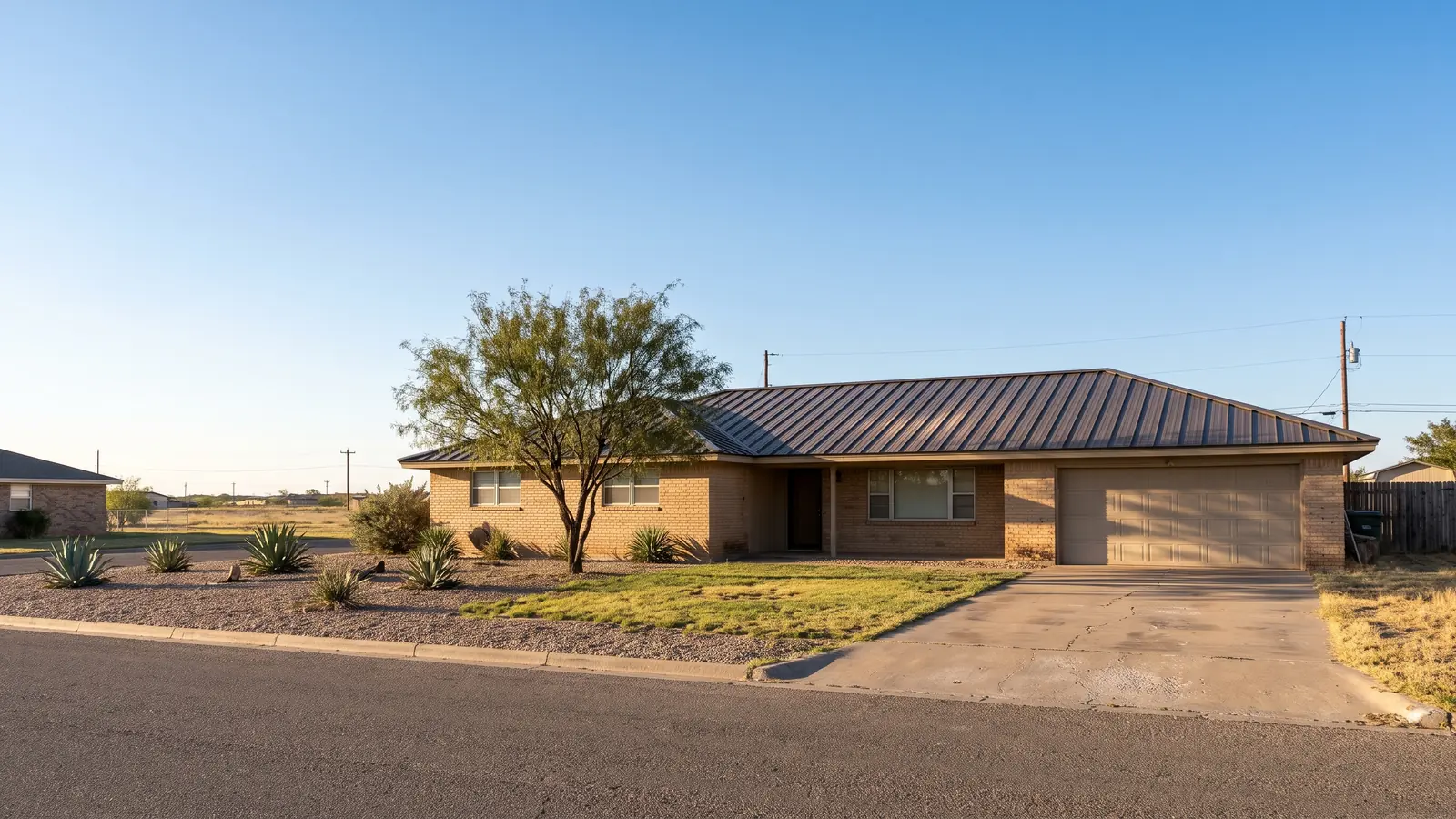
Standing Seam Metal Roof Systems in Midland
Panels that look the same from the street can carry different warranties, slope limits and test ratings, as Sheffield Metals puts it. These are the systems that show up in standing seam quotes, starting with the seam.

Snap-Lock Standing Seam
Snap-lock is the simpler of the two seam types. One edge of each panel has a male leg and the other a female leg, and they snap together over clips screwed to the deck. Nothing gets seamed, so it goes on faster and costs less. SFS recommends it for short panel runs on slopes of 3:12 or steeper. It's less weathertight than a mechanically seamed panel, but tighter than a screw-down roof. A damaged panel can be un-snapped and replaced.
- Typical seam height: about 1.75 inch on one supplier's profile
- Slope: 3:12 and up (SFS); Sheffield says snap-lock in general shouldn't go on 2:12 or flatter
- Repairs: single panels can be swapped out

Mechanically Seamed (Single and Double Lock)
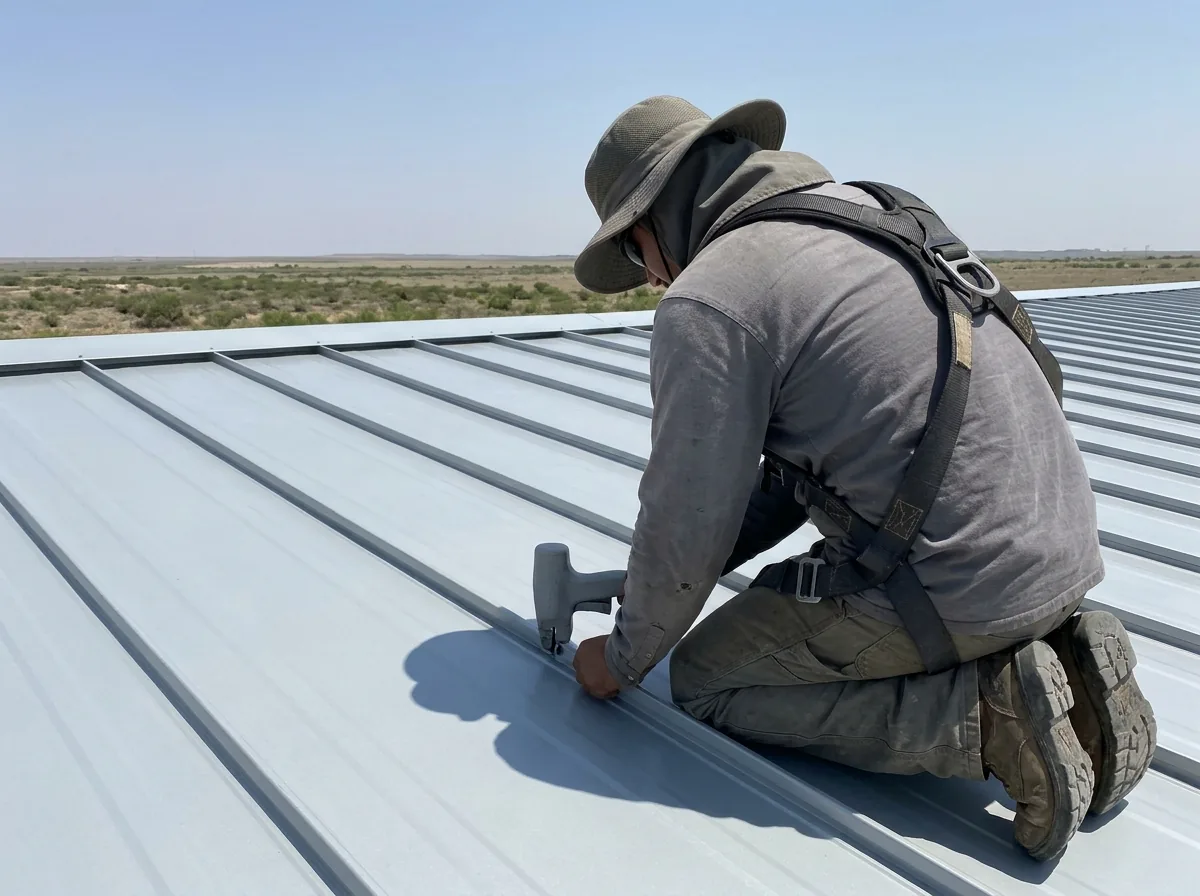
With a mechanically seamed panel, the legs are folded together on the roof with a hand or powered seamer. One fold is a single lock and two folds a double lock. SFS calls it the most weather-resistant metal roof on the market, with the best wind uplift values. It's the one to use on low slopes, where SFS recommends double lock. It costs more because of the seaming time and the tool, and a double lock takes longer than a single. One panel is hard to replace, because it has to be unseamed down its full length.
- Slope: down to low slopes; one supplier's 1.5-inch profile is rated to 2:12, or 1:12 with sealant in the seam (steel only)
- Clips: fixed clips on short runs, floating clips on long runs (SFS)
- Trade-off: best seal and uplift, slower install, harder panel swaps

Nail-Strip Standing Seam
A nail-strip (fastener-flange) panel looks like standing seam from the ground but skips the clips. Screws go through slots in a flange on the panel's edge, and the next panel snaps over them. It's quicker and cheaper to install. Sheffield Metals is frank about the downsides of its own version. It isn't engineered, it qualifies for no weathertight warranty, the slot edges can tear underlayment if handled carelessly, and doing without clips can lead to problems later. It suits sheds, porches and budget jobs better than a whole house.
- Typical seam height: about 1 inch
- Slope: 3:12 minimum on Sheffield's profile
- Ask for: the warranty terms in writing, since Sheffield's own nail-strip profile carries none for weathertightness

Low-Slope Standing Seam
Standing seam can go flatter than any other metal panel in the code. The 2018 IRC sets its floor at 1/4:12, against 3:12 for lapped panels without sealant and 1/2:12 with it. That makes it the panel for low porch roofs, additions and patio covers that tie into a house. On these roofs, ask for a mechanically seamed, double-lock panel that the maker rates for your actual slope. The code number is a floor; the supplier profiles we read are rated no lower than 1:12. On a reroof, the code doesn't make you meet the 1/4:12 minimum if the existing roof drains.
- Code minimum: 1/4:12 for standing seam (2018 IRC R905.10.2)
- Lapped panels: 3:12 without sealant; 1/2:12 when the laps are sealed
- Reroof exception: positive drainage is enough on an existing roof (R908.1)

Galvalume, SMP and PVDF Finishes
Under the paint, most steel panels are Galvalume: steel coated with aluminum-zinc alloy. The code minimum is AZ50, meaning 0.50 ounce of coating per square foot, and AZ55 adds a little more. The paint is the bigger choice. Kynar 500 PVDF paint has at least 70% PVDF in the resin. SMP (silicone-modified polyester) has about 30% silicone, costs less, and McElroy rates it behind PVDF for fade and chalk resistance. Every paint chalks and fades somewhat. What matters is how much the warranty allows before it pays.
- Example PVDF terms: 40 years film adhesion, 30 years chalk, 30 years color change (one McElroy warranty; terms vary by maker)
- Acrylic-coated Galvalume: scuffs easily when walked on (Sheffield Metals)
- Ask for: the paint system by name and the warranty's chalk and fade limits
Why Midland homeowners call Midland Metal Roofing
- Free quotes, no obligation to hire
- Panel, gauge and price in writing before any work
- Your request goes to one Midland roofer, not a call list
- Homeowners never pay us for the referral
Fixed and Floating Clips Under the Seams
Clips are the part of a standing seam roof you never see, and they decide how the panels handle heat. A fixed clip pins the panel to the deck. A floating (expansion) clip lets the panel move with temperature changes, and costs more. SFS uses fixed clips on short runs and floating clips on long ones. Long panels move more than short ones, and Midland's summers give them plenty to move about. The metal roof coating page has the local temperature numbers.
Movement also ties in to oil canning, the wavy look in the flat part of a panel. HomeGuide lists a level deck, a heavier gauge, ribbed or striated panels and fastening that allows thermal movement as the ways to prevent it. If a smooth, flat panel look matters to you, ask the roofer which clip the panel maker specifies for your run length and whether the panel has stiffening ribs.
When Standing Seam Is Worth Paying For
SFS says exposed-fastener roofs are almost always the cheaper option, so standing seam doesn't always pay back. It makes the most sense in three cases:
You'll stay in the house a long time
SFS puts a standing seam roof at 50+ years against 20 to 30 for screw-down panels. The full lifespan comparison is on the replacement page.The roof is low-slope
SFS doesn't recommend screw-down panels below 3:12.You don't want screw upkeep
Screw-down roofs need their fasteners replaced over time. Standing seam has no exposed screws.
For a shop, carport or a house you'll sell in a few years, R-panel may be the better buy. If hail is the main worry, compare impact ratings on the Class 4 metal roof page before you pick a seam.