
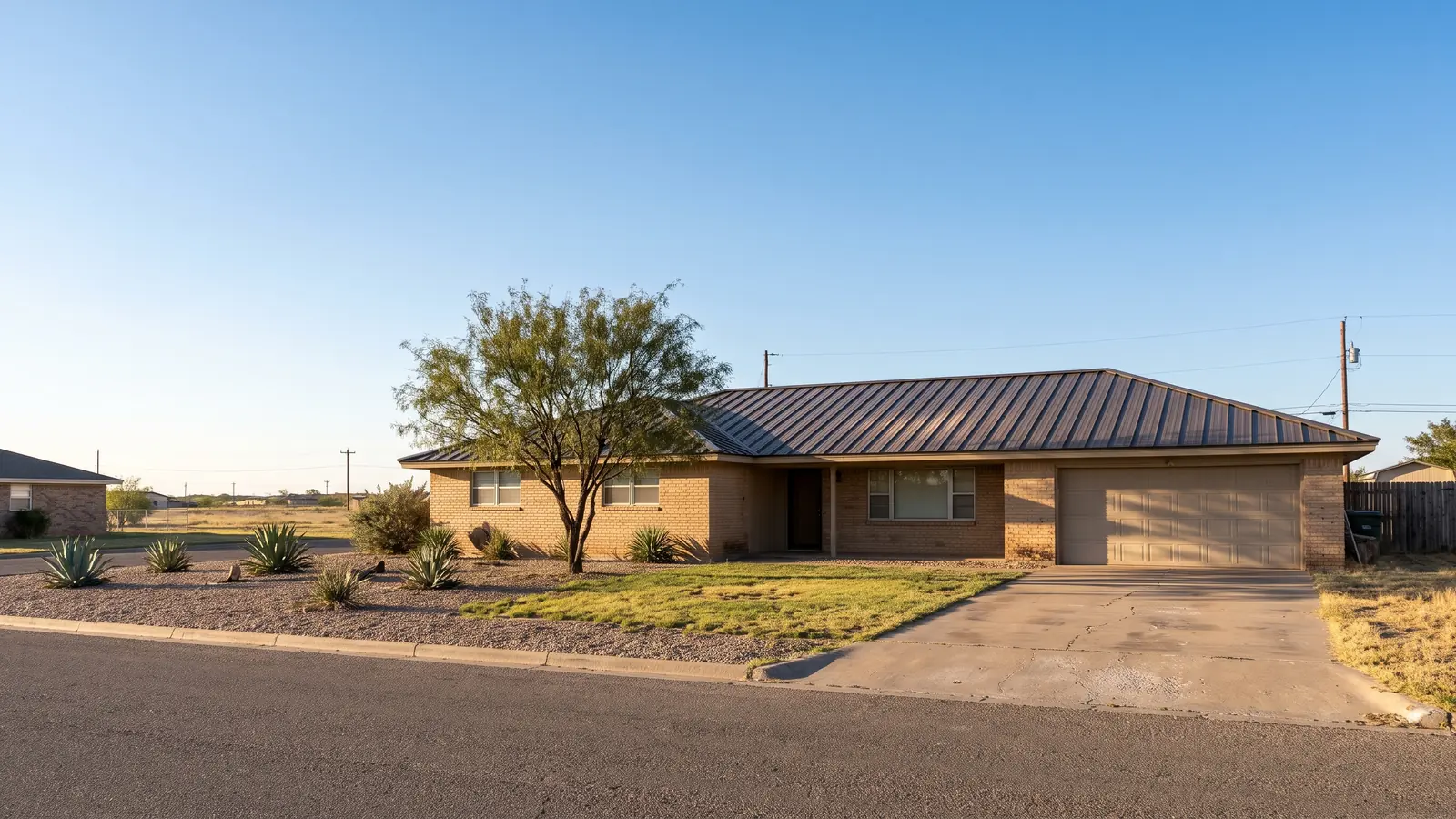
Stone-Coated Steel Profiles for Midland Roofs
Stone-coated steel comes in a handful of shapes. They share the same steel and the same granule layer, but they differ in how they're fastened and how flat a roof they'll sit on. The profile you choose also decides whether battens go down first.

Stone-Coated Shake Panels
Shake panels copy the thick, uneven butt edge of a split wood shake. On a brick ranch house they give the rustic look of cedar without the wood. One maker sells two versions. Its standard shake panel goes over battens, and its newer "XD" shake panel is fastened straight to the deck with hidden fasteners.
- Installed weight: 150 lb per square for both shake versions
- Lowest pitch on the spec sheet: 3:12
- Panel size: about 14 x 52 in, roughly 23 panels per square

Stone-Coated Tile Panels
Tile panels copy the rolling profile of clay tile, and they sit well on a stucco house. If the house has real clay or concrete tile now, that roof comes off first, because the 2018 IRC doesn't allow a recover over tile. A steel tile panel brings the shape back at a fraction of the weight.
- Battened tile panel: 16.5 x 52 in, 20 panels per square, 150 lb per square
- Direct-to-deck tile panel: 17 x 44.25 in, 25.2 panels per square, 160 lb per square
- Lowest pitch on the spec sheet: 3:12 for both
Stone-Coated Shingle Panels
The shingle profile looks like a thick architectural asphalt shingle, so it blends in on a street of shingle roofs. It's also the profile that needs the steepest roof.
- Lowest pitch on the spec sheet: 4:12, steeper than the shake and tile profiles
- Installed weight: 150 lb per square
- Method: direct to deck
For a painted metal shingle without the stone layer, see metal shingles.
Battens or Direct to the Deck
Battens are rows of wood strips fastened across the deck, and the panels hook over them. One manufacturer installs its standard tile and shake on battens and its newer tile, shake and shingle lines straight onto the deck. Direct-to-deck panels skip a layer of lumber, while a batten roof sits up off the deck. Ask which method the quote assumes and whether the battens are priced in.
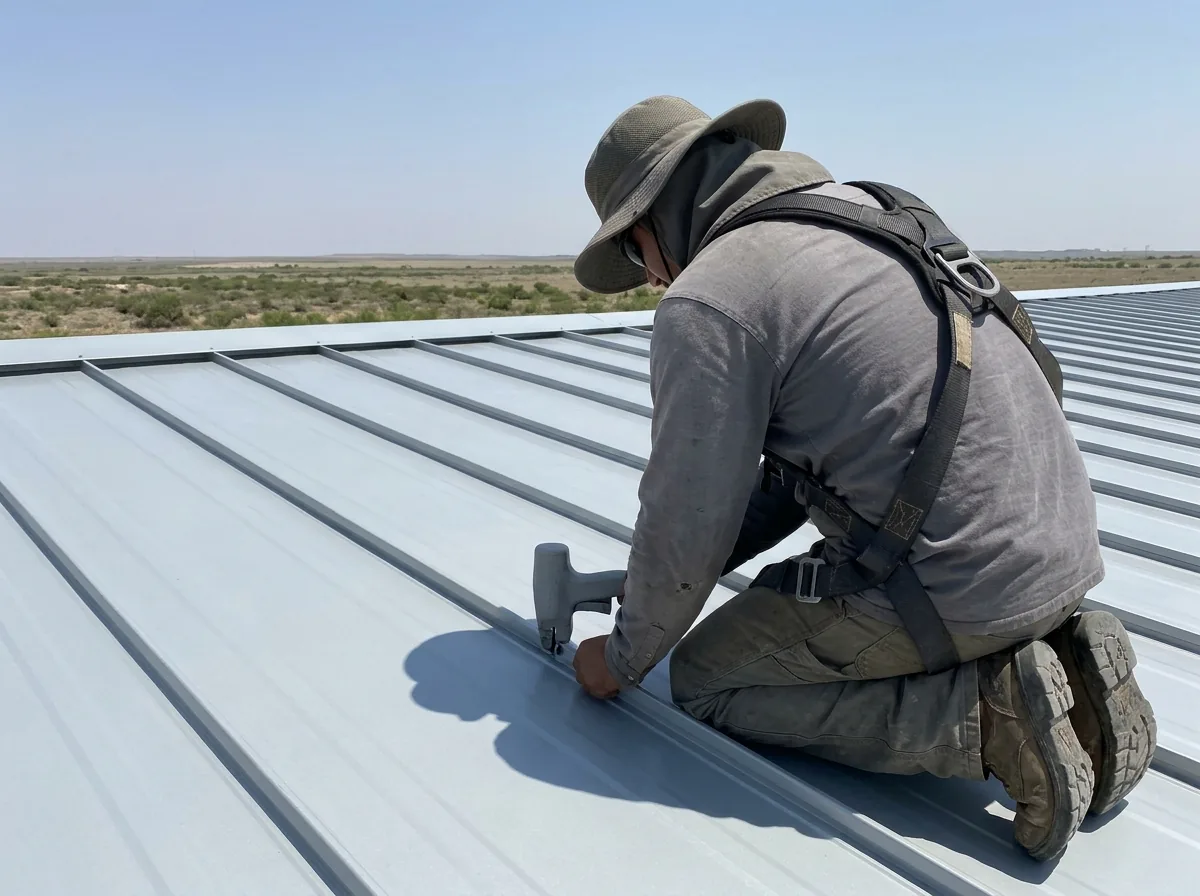
Why Midland homeowners call Midland Metal Roofing
- Free quotes, no obligation to hire
- Panel, gauge and price in writing before any work
- Your request goes to one Midland roofer, not a call list
- Homeowners never pay us for the referral
What to Ask Before a Stone-Coated Roof Goes On
The installed weight is the number that surprises people. At 150 to 160 lb per square, a stone-coated roof is lighter than the 250 to 400 lb per square that asphalt runs, and nowhere near concrete tile at 600 to 1,100. That's why a house that once had heavy tile can take it without new framing.
Hail is the other question in Midland. Several stone-coated lines carry a UL 2218 Class 4 impact listing, the top rating, and the Class 4 metal roof page explains what that test means and how Texas insurers treat it. Ask for the listing for the exact profile, not the brand in general.
A few checks for the quote itself:
Profile and color by name
, so the warranty document matches what goes on the roofBattens or direct to deck
, with lumber in the price if battens are usedTear-off or recover
if the old roof stays, the metal roof over shingles rules apply; if it comes off, see metal roof replacementRidge, hip and valley trim
made for the same profile
Stone-coated steel suits a pitched house roof with a traditional look. A shop, barn or low porch is a better fit for R-panel or standing seam.